3 Days in Paris: The Perfect First-Time Itinerary
Three days in Paris is the sweet spot for a first visit: enough to see the icons without rushing, with time left for long lunches and wandering. This itinerary groups the sights by neighbourhood so you walk more and ride the metro less, and it follows the real opening days and ticket rules so you don't lose half a day to a closed museum. It builds on the 3-day outline in our Paris travel guide, hour by hour. Still choosing dates? See the best time to visit Paris.
Your 3 days in Paris at a glance
Day 1: Île de la Cité, the Latin Quarter and the Louvre
Day 2: Musée d'Orsay, Saint-Germain, the Eiffel Tower and a sunset Seine cruise
Day 3: Montmartre, Le Marais and the Arc de Triomphe at dusk
Best base: Le Marais, Saint-Germain or the Latin Quarter
Avoid: doing Day 1 on a Tuesday (Louvre closed) or Day 2 on a Monday (Orsay closed)
Tickets to book before your 3 days in Paris
The big sights in Paris now run on timed tickets. Book these before you fly, ideally 2 to 4 weeks ahead in spring and summer:
- Sainte-Chapelle (Day 1, first slot of the day)
- The Louvre (Day 1, afternoon) on louvre.fr (or compare Louvre tickets and guided tours)
- Musée d'Orsay (Day 2, opening time)
- Eiffel Tower (Day 2, late afternoon) on the official Eiffel Tower site (or compare Eiffel Tower tickets)
- Seine cruise (Day 2, sunset): flexible tickets are fine
Is the Paris Museum Pass worth it for this plan? The 2-day pass covers Sainte-Chapelle, the Louvre and Orsay, and it starts saving money from around the fourth visit. Add the Conciergerie on Day 1 or the Orangerie on Day 2 and it pays off. If you stick to the three museums, individual tickets are usually cheaper. The Eiffel Tower is not included either way.
Day 1 in Paris: Île de la Cité, the Latin Quarter and the Louvre
9:00 am: Sainte-Chapelle and Notre-Dame
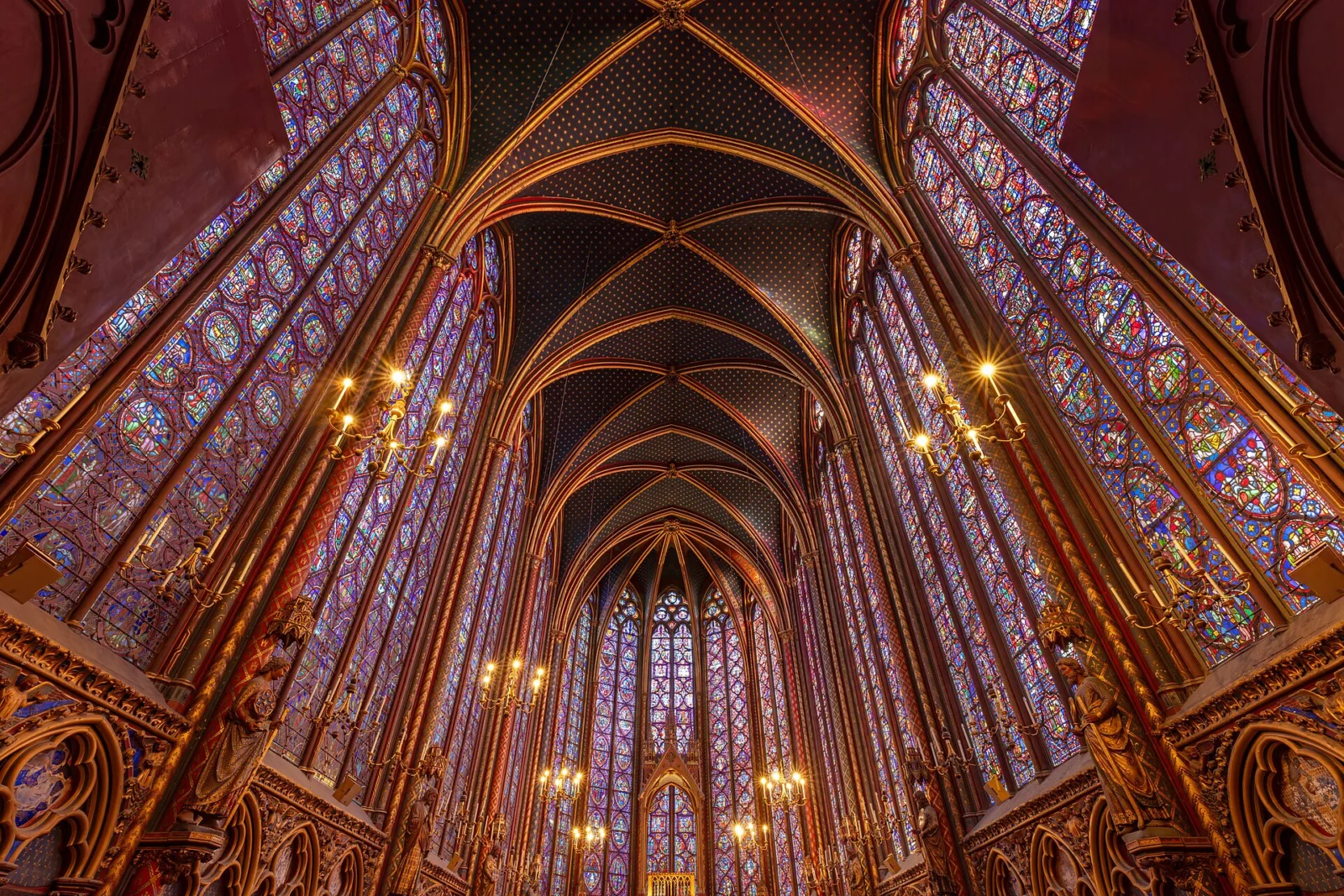
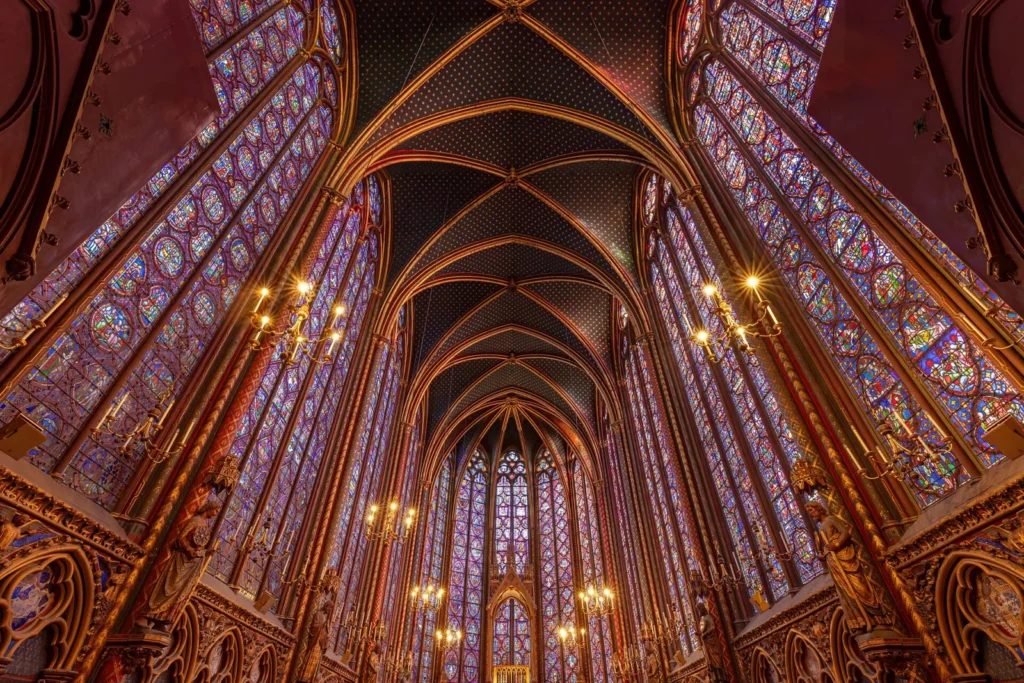
Start with the first entry slot at Sainte-Chapelle, when the morning light hits its 15 enormous stained-glass windows and the chapel is still quiet. Then walk five minutes to Notre-Dame, which reopened in December 2024 after its restoration. Entry to the cathedral is free, and you can reserve a free time slot online to skip most of the queue.
12:30 pm: lunch and the Latin Quarter
Cross the Petit Pont to the Latin Quarter. Browse the Shakespeare and Company bookshop, have lunch at a bistro offering a formule (starter and main, or main and dessert, at a fixed price), then walk up past the Sorbonne to the Panthéon. Finish with a slow walk through the Luxembourg Gardens.
3:00 pm: the Louvre
Take metro line 1 or walk 20 minutes along the Seine to the Louvre for your timed entry. Don't try to see it all: pick two or three wings, such as the Denon wing for the Mona Lisa, the Winged Victory and the big French paintings, then the Sully wing for ancient Egypt. Three hours is plenty. Enter by the Carrousel du Louvre entrance, which is usually quieter than the pyramid.
7:00 pm: the Seine and Île Saint-Louis
Walk out through the Tuileries or along the river to Pont Neuf and Pont des Arts for the evening light, then cross to Île Saint-Louis for dinner and an ice cream from Berthillon (closed Mondays and Tuesdays). The quiet streets of the island are one of the loveliest places in Paris after dark.
Day 1 tip: this whole morning is on foot. Nearest metro to start: Cité (line 4). The walk from Notre-Dame to the Luxembourg Gardens to the Louvre is about 4 km, broken up by lunch.
Day 2 in Paris: Musée d'Orsay, Saint-Germain and the Eiffel Tower
9:30 am: Musée d'Orsay
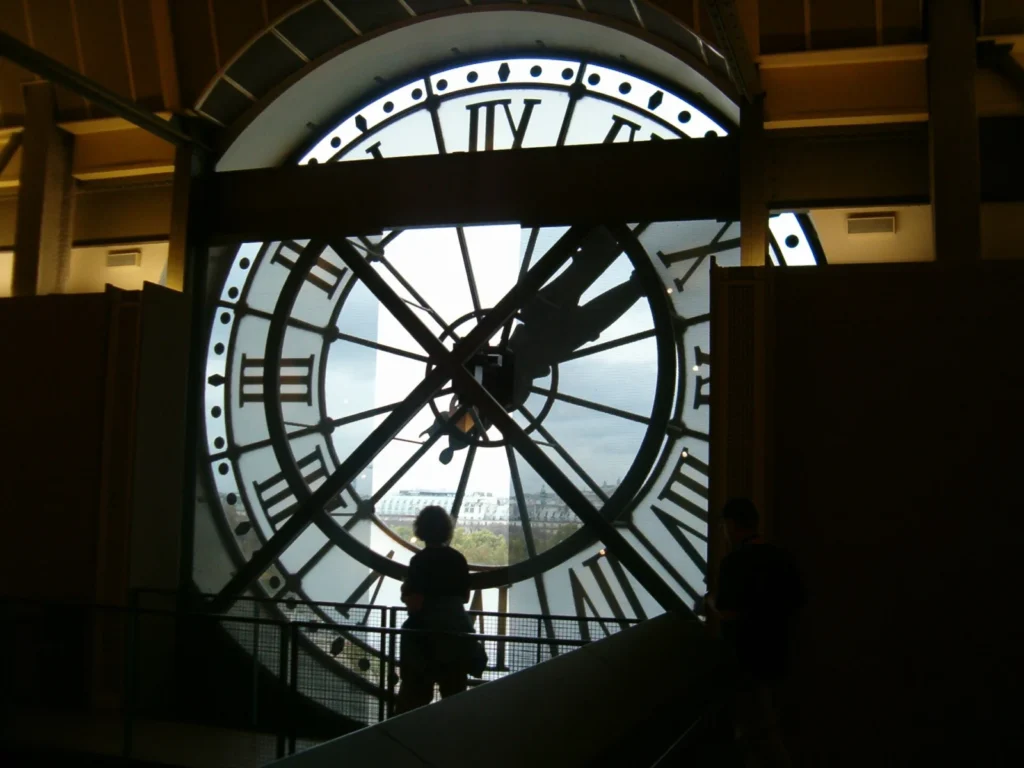
Be at the door when the Musée d'Orsay opens. Head straight to the fifth floor for the Impressionists (Monet, Renoir, Degas, Van Gogh) before the crowds arrive, then see the view of Paris through the giant station clock. Two and a half hours is enough. The museum is closed on Mondays and open late on Thursdays.
12:30 pm: lunch in Saint-Germain
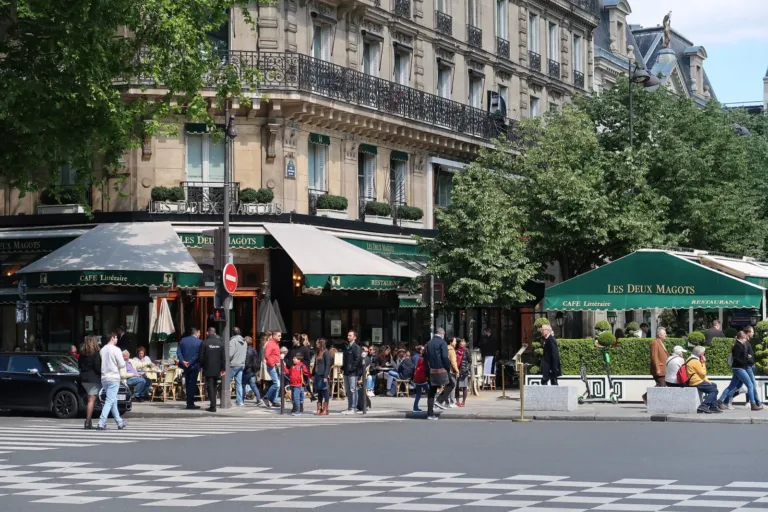
Walk ten minutes into Saint-Germain-des-Prés. Have lunch in the streets around rue de Buci, then a coffee on the terrace of one of the famous literary cafés on boulevard Saint-Germain. They are expensive, so a coffee rather than a meal is the smart move.
3:00 pm: Les Invalides and the Eiffel Tower
Walk west along the Left Bank to Les Invalides and Napoleon's tomb, or, if you prefer gardens, the Rodin Museum next door. From there it's a 20-minute walk across the Champ de Mars to the Eiffel Tower. Aim for a late-afternoon time slot so you're at the top as the light turns golden. Allow about 2 hours in total, including security.
7:00 pm: a Seine cruise at sunset
Cruise boats leave from the quays right below the Eiffel Tower. An hour on the Seine at sunset takes you past the Louvre, Notre-Dame and the bridges you walked on Day 1. Afterwards, walk up to the Trocadéro: on the hour after dark, the tower sparkles for five minutes. Have a late dinner in the 7th or 15th arrondissement.
Day 2 tip: this day follows the Left Bank from east to west, almost all on foot. If your feet need a break, RER C links Musée d'Orsay to Champ de Mars–Tour Eiffel in a few minutes.
Haven't booked yet? A central hotel makes this itinerary work. Compare flights and hotels for your dates.
Day 3 in Paris: Montmartre, Le Marais and the Arc de Triomphe
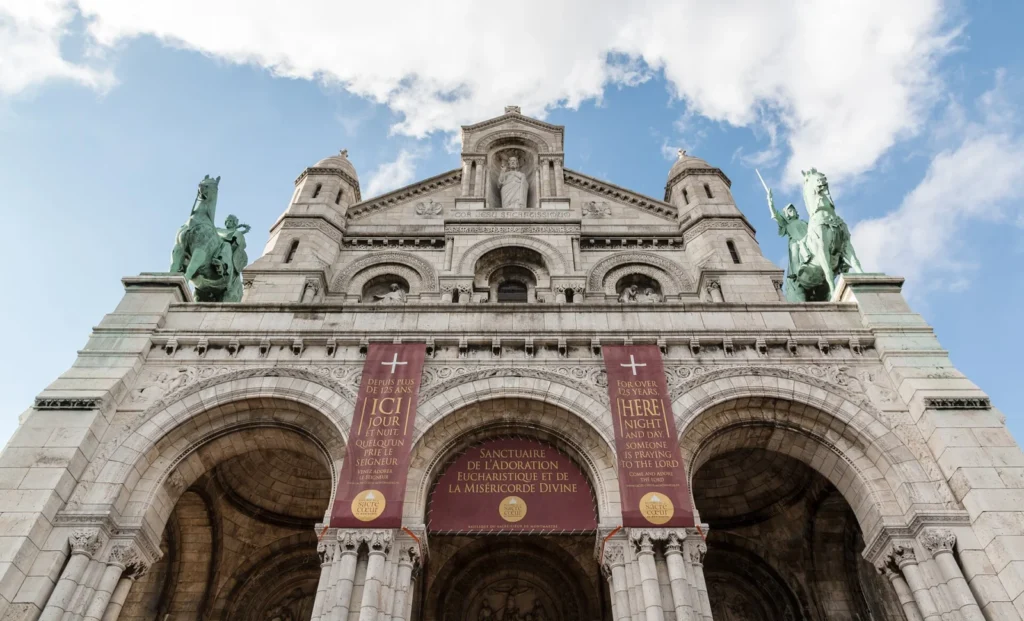
8:30 am: Montmartre and Sacré-Cœur
Get to Montmartre early, before the tour groups. Walk up from Abbesses metro (line 12) past the "I love you" wall to the Sacré-Cœur basilica, which is free to enter and has one of the best views over Paris. Then explore the village side of the hill: Place du Tertre with its painters, rue de l'Abreuvoir and the pink Maison Rose café.
12:30 pm: lunch in Le Marais
Take the metro to Le Marais. Queue for a falafel on rue des Rosiers, the city's most famous street food, or head to the Marché des Enfants Rouges, the oldest covered market in Paris, where small stalls cook everything from crepes to Moroccan and Japanese food.
2:30 pm: Place des Vosges and the Marais
Walk to Place des Vosges, the oldest planned square in Paris, and rest under the arcades. Next door, the Musée Carnavalet tells the story of Paris, and its permanent collections are free. Spend the rest of the afternoon wandering the Marais: independent boutiques, hidden courtyards and the Picasso Museum if you still have energy.
6:30 pm: the Arc de Triomphe at dusk
Take metro line 1 to Charles de Gaulle–Étoile and climb the 284 steps to the roof of the Arc de Triomphe around sunset. The view straight down the Champs-Élysées to the Louvre, with the Eiffel Tower to one side, is the perfect way to end three days in Paris. Walk down the avenue afterwards, then head back to your neighbourhood for a farewell dinner.
Day 3 tip: Montmartre is hilly. If you'd rather not climb, the funicular from the bottom of the hill to Sacré-Cœur takes a standard metro ticket. Watch your belongings around the basilica steps, a hotspot for pickpockets and petition scams.
Want to add Versailles? How to adapt the plan
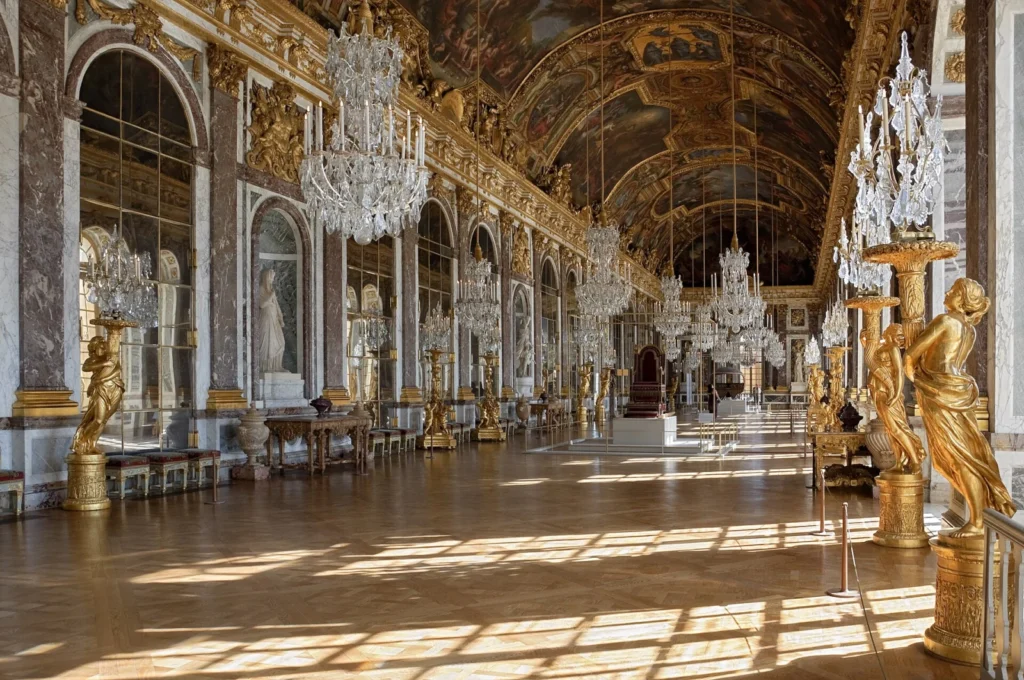
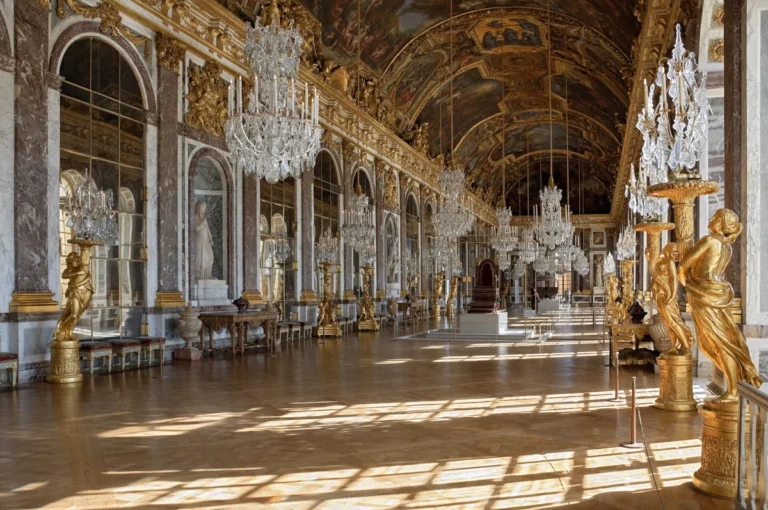
Versailles deserves a full day, so it works best as a fourth day, as in our 5 days in Paris itinerary. If you only have three, swap it for Day 3 and move the Arc de Triomphe to that evening. Take the RER C to Versailles Château Rive Gauche (about 40 minutes), arrive at opening time with a timed ticket from the official Versailles site, and keep the afternoon for the gardens and Marie-Antoinette's estate. The palace is closed on Mondays. Book your entry time before you go: compare Palace of Versailles tickets.
Where to stay for 3 days in Paris
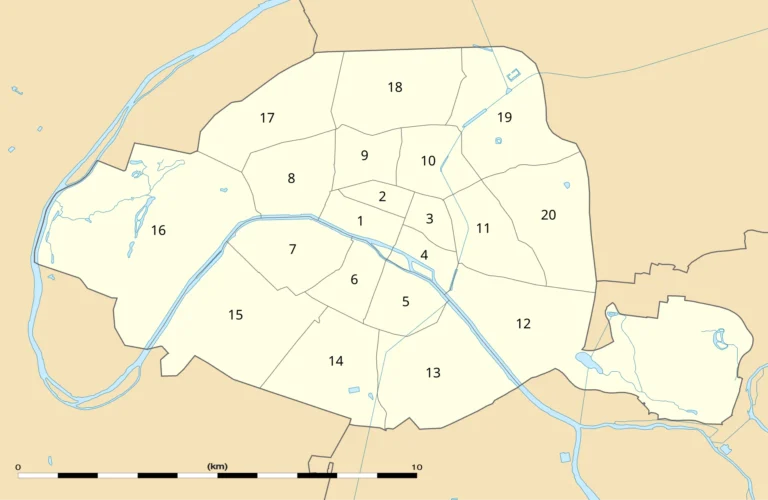
Base yourself in Le Marais, Saint-Germain-des-Prés or the Latin Quarter: every day of this plan starts within walking distance or a short metro ride. On a tighter budget, the 11th arrondissement is well connected by metro lines 1 and 9. Our guide to where to stay in Paris compares eight areas in detail. Compare the best areas in our Paris travel guide and check prices on our hotels page.
Practical tips for 3 days in Paris
- Plan around closing days. The Louvre closes on Tuesdays; Orsay and Versailles close on Mondays. Swap Days 1 and 2 if needed.
- Go early or late. The first hour and the last two hours are the quietest at every major sight.
- Use the metro for long hops, walk the rest. Load your tickets on a Navigo Easy card or the RATP app.
- Eat the French way. A lunch formule is the best-value meal of the day, and dinner starts from around 7:30 pm. Book popular bistros ahead.
- Check the season. Spring and early autumn are the best months: see the best time to visit France.
- Get covered. Visitors pay for healthcare in France, so read our guide to travel insurance for France.
3 days in Paris: FAQ
Are 3 days enough in Paris?
Yes, for a first visit. Three days in Paris covers the Louvre, Orsay, the Eiffel Tower, Notre-Dame, Montmartre and Le Marais at a comfortable pace. With a fourth day, add Versailles.
What is the best order to see Paris in 3 days?
Start with Île de la Cité, the historic heart, then the Left Bank and the Eiffel Tower, and finish in Montmartre and Le Marais. Just check the closing days: the Louvre on Tuesdays, Orsay and Versailles on Mondays.
Can I fit Versailles into 3 days in Paris?
Yes. Replace Day 3 with Versailles and keep the Arc de Triomphe for the evening when you get back. Avoid Mondays, when the palace is closed.
Where should I stay for a 3-day trip to Paris?
Le Marais, Saint-Germain-des-Prés or the Latin Quarter. All three are central and within walking distance of most stops on this itinerary. See the Paris travel guide for more areas.
Ready for your 3 days in Paris?
Book flights and a central hotel early, especially from April to October, then reserve your museum time slots.
Staying longer in Paris? Follow our 5 days in Paris itinerary. Staying longer in France? Read our complete France travel guide for itineraries beyond Paris.
Photos from Wikimedia Commons: Sainte-Chapelle by Diego Delso (CC BY-SA 4.0); Musée d'Orsay by Sveter (CC BY-SA 2.5); Sacré-Cœur by Dietmar Rabich (CC BY-SA 4.0); Hall of Mirrors by Myrabella (CC BY-SA 3.0).