
Paris guide · Updated September 2026
Paris Travel Guide: How to Plan Your First Trip
Where to stay, what to see, how to get around and how to plan 3 perfect days in the French capital, with practical tips for a first visit.
Paris travel guide: the essentials at a glance
Paris rewards good planning. The big sights need timed tickets, neighbourhoods feel completely different from one another, and where you sleep changes the whole trip. This hub gathers everything you need: the top things to do, the best areas to stay, a 3-day plan, getting around, what to eat and the best day trips. It is part of our wider France travel guide.
Paris essentials
Airports: Charles de Gaulle (CDG), Orly (ORY) and Beauvais (BVA, used by some low-cost airlines, 75 km away)
From CDG: RER B train to central Paris in about 35 minutes
From Orly: metro line 14 to the city centre in about 25 minutes
Getting around: metro, RER trains, buses and your own two feet. Central Paris is very walkable
How long to stay: 3 to 4 days for a first visit
Best time: April to June and September to October
Top 10 things to do in Paris

- Eiffel Tower. Book a timed ticket on the official Eiffel Tower site and go up around sunset. After dark, the tower sparkles for five minutes every hour on the hour.
- The Louvre. Home of the Mona Lisa and one of the largest museums in the world. Book a timed ticket on louvre.fr, pick two or three wings rather than trying to see it all, and note that it closes on Tuesdays.
- Musée d'Orsay. The best Impressionist collection anywhere, in a former railway station. Closed on Mondays and open late on Thursdays.
- Notre-Dame and Île de la Cité. The cathedral reopened in December 2024 after its restoration, and entry is free. Combine it with the stained glass of Sainte-Chapelle next door (book ahead).
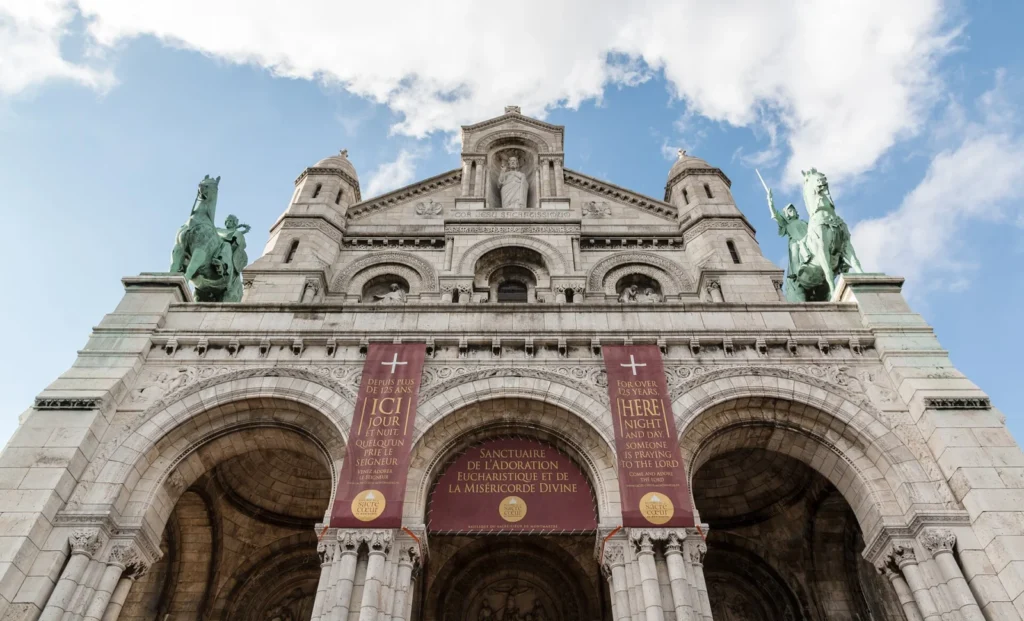
- Montmartre and Sacré-Cœur. Climb the hill early in the morning for the view over Paris before the crowds, then wander Place du Tertre and the quiet lanes behind it.
- A Seine river cruise. An hour on the water is the easiest way to see the city's monuments. Go at dusk.
- Le Marais. Paris's most walkable neighbourhood, with Place des Vosges, the Picasso Museum, boutiques and some of the best street food in the city.
- Latin Quarter and the Luxembourg Gardens. Browse the Shakespeare and Company bookshop, see the Panthéon, then relax in Paris's favourite park.
- Arc de Triomphe and the Champs-Élysées. Climb to the roof of the arch for one of the best views in the city, straight down the avenue.
- The Palace of Versailles. The most spectacular day trip from Paris (see day trips below).
Money-saving tip: planning to visit three or more museums and monuments in two days? The Paris Museum Pass covers the Louvre, Orsay, the Arc de Triomphe, Sainte-Chapelle, Versailles and more. You still need to book time slots at the busiest sites.
Where to stay in Paris: the best areas
Paris is divided into 20 numbered districts, or arrondissements, spiralling out from the centre. For a first visit, stay in arrondissements 1 to 7 or the 11th: you will walk to most sights and save hours on the metro.

Le Marais (3rd and 4th)
Best for: first-timers who want to walk everywhere. Medieval streets, Place des Vosges, boutiques, falafel on rue des Rosiers and great nightlife.
Saint-Germain-des-Prés (6th)
Best for: a classic, romantic Paris. Famous cafés, art galleries and chic shops, close to the Louvre and Orsay. One of the priciest areas.
Latin Quarter (5th)
Best for: atmosphere on a budget. Student energy, bookshops, the Panthéon and the Luxembourg Gardens, with good-value hotels.
Near the Eiffel Tower (7th)
Best for: families and views. Quiet, safe and elegant, with the tower and the Seine on your doorstep. Less lively at night.
Montmartre (18th)
Best for: village charm and lower prices. Hilly lanes, artists and views over Paris, a little further from the main sights.
11th arrondissement
Best for: value and nightlife. Lively bars and some of the city's best bistros, with lower hotel prices and fast metro links.
Compare prices for these areas on our hotels page, or search flights and hotels together on our booking page. Book 2 to 3 months ahead for spring and summer.
How to spend 3 days in Paris
Three days is enough to see the icons at a comfortable pace. Group sights by area to avoid crossing the city back and forth. Want the hour-by-hour version, with the tickets to book and the closing days to avoid? Follow our 3 days in Paris itinerary. Staying longer? Our 5 days in Paris itinerary adds a full day at Versailles and a slower pace.
Day 1: the historic heart
Notre-Dame and Sainte-Chapelle in the morning, lunch in the Latin Quarter, the Luxembourg Gardens, then the Louvre in the late afternoon. Evening walk along the Seine to Pont Neuf.
Day 2: Eiffel Tower and the Left Bank
Musée d'Orsay at opening time, lunch in Saint-Germain, the Eiffel Tower in the afternoon, then a Seine cruise at sunset and the Trocadéro to watch the tower sparkle.
Day 3: Montmartre and Le Marais
Sacré-Cœur and Montmartre early, then Le Marais for lunch, Place des Vosges and the boutiques. Finish with the view from the Arc de Triomphe at dusk.
When to visit Paris
The best time to visit Paris is April to June and September to October: mild weather, blooming parks and shorter queues than in summer. July and August are hot and busy at the big sights, although the city itself feels calmer as Parisians leave on holiday. Winter is cheap and festive, with Christmas lights and the January sales. See the full best time to visit France guide.
Getting around Paris
The metro is fast and runs until around 12:40 am (later on Friday and Saturday nights), with a station every few hundred metres in the centre. RER trains cover the airports and Versailles. Load tickets onto a Navigo Easy card or use the official RATP app. That said, central Paris is best discovered on foot: many sights are 15 to 20 minutes' walk apart. Vélib' bike-share stations are everywhere too.
What to eat in Paris
Start the day at a boulangerie with a croissant or pain au chocolat, and order a formule at lunch, the best-value meal in Paris. Classic bistro dishes to try: steak frites, French onion soup, duck confit and coq au vin. Visit a covered market like the Marché des Enfants Rouges in Le Marais, the oldest in the city, and book dinner ahead at popular bistros. More ideas in our French food and wine guides.
Best day trips from Paris
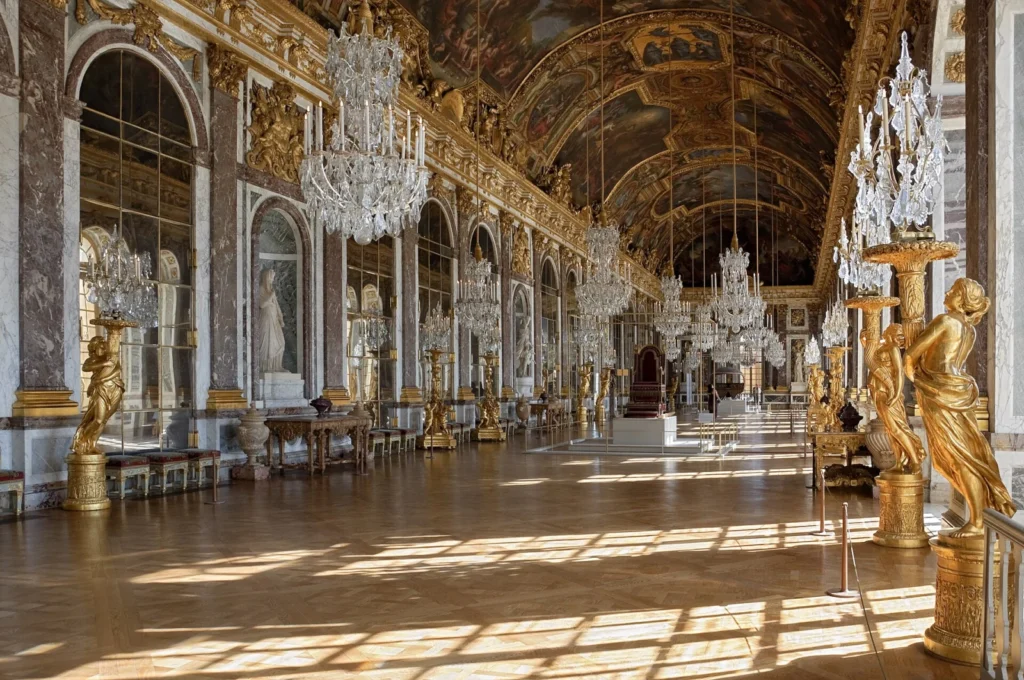
- Versailles: the palace, the Hall of Mirrors and the vast gardens, about 40 minutes away by RER C. Closed on Mondays. Book on the official Versailles site and plan a full day.
- Giverny: Monet's house and water-lily gardens, open from spring to autumn. Train to Vernon, then a shuttle or bike.
- Étretat and Honfleur: chalk cliffs and a postcard harbour on the Normandy coast, best by car or on a tour. See our Étretat and Honfleur day trip.
- Champagne: Reims is about 45 minutes by TGV, with cellar tours at the great Champagne houses.
- Loire Valley châteaux: Chambord and Chenonceau are possible in a long day, but better with a night there.
- Mont-Saint-Michel: a very long day trip (see our Mont-Saint-Michel guide). Better as part of a Paris and Normandy itinerary. The D-Day beaches are also possible as a long day trip.
Paris travel guide: FAQ
How many days do you need in Paris?
Three to four days is ideal for a first visit: enough for the main sights, a couple of neighbourhoods and a day trip to Versailles. With a week, add Giverny, Champagne or a few days in another French region.
What is the best area to stay in Paris?
For first-timers, Le Marais or Saint-Germain-des-Prés (see our full guide to where to stay in Paris). For better value, the 11th arrondissement or the Latin Quarter. Anywhere in arrondissements 1 to 7 keeps you within walking distance of the main sights.
Is Paris expensive?
Paris is one of Europe's more expensive cities. A mid-range trip costs roughly €200 to €300 per person per day including a central hotel, meals and museum entries. Lunch menus, bakeries and free sights like the parks, churches and markets help a lot.
Is Paris safe for tourists?
Yes, Paris is generally safe. The main issue is pickpockets on the metro, on the RER B from the airport and around busy sights like the Eiffel Tower and Sacré-Cœur. Keep your phone and wallet in a front pocket or a zipped bag.
What should you book in advance in Paris?
Book the Eiffel Tower summit, the Louvre, Sainte-Chapelle, the Catacombs (tickets open 7 days ahead) and Versailles as soon as your dates are fixed, along with any restaurant you really want to try.
How much does a trip to Paris cost?
As a rough guide, budget travellers can manage on about €100 to €150 per person per day including a hostel or simple hotel, while a mid-range trip costs about €200 to €350 per person per day, excluding flights. Our guide to cheap hotels in Paris shows how to keep costs down.
Ready to book your trip to Paris?
Compare flights into Paris CDG and Orly, then book a central hotel early, especially for spring and summer.
Planning more of France? Read our complete France travel guide, or the official Paris tourist office site, Paris je t'aime.
Photos from Wikimedia Commons: Pont Neuf and Sacré-Cœur by Dietmar Rabich (CC BY-SA 4.0); Louvre by Benh Lieu Song (CC BY-SA 4.0); Place des Vosges by GFreihalter (CC BY-SA 4.0); Hall of Mirrors by Myrabella (CC BY-SA 3.0).