

French Wine Regions: A Traveller’s Guide to the 11 Best Regions (2026)
France makes some of the most famous wines in the world, and visiting the vineyards is one of the best ways to see the country: medieval wine villages, châteaux, cellars carved into chalk and long lunches with the winemaker. This guide to the French wine regions explains what each one is known for, the best base for a visit and how to plan tastings, so you can choose the right region for your trip, from Champagne an hour from Paris to the sunny vineyards of Provence. For more on French food, see our coq au vin recipe.
French wine regions at a glance
Closest to Paris: Champagne, about 45 minutes by TGV to Reims
Most famous reds: Bordeaux and Burgundy
Best for a road trip: the Alsace Wine Route and the Loire Valley
Best value: Languedoc-Roussillon and the South West
Best time to visit: May to October; the harvest is in September and October
Map of the French wine regions
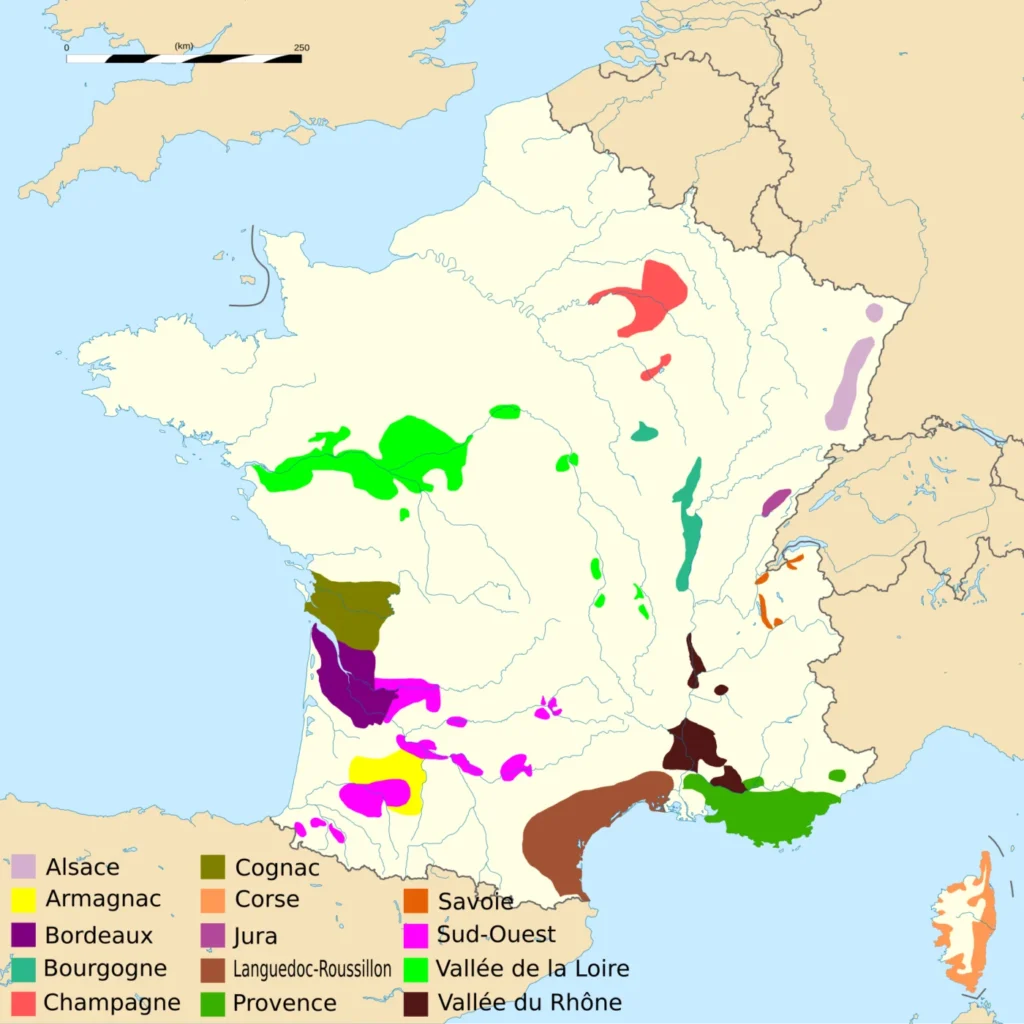
France has about a dozen major wine regions, each with its own grapes, climate and traditions. The map labels them in French: Bourgogne is Burgundy, Vallée de la Loire is the Loire Valley, Vallée du Rhône is the Rhône Valley, Corse is Corsica and Sud-Ouest is the South West. Wines are usually named after the place they come from rather than the grape, which is why learning the French wine regions is the key to reading a French wine list.
The 11 main French wine regions
1. Bordeaux

The world's most famous red wine region, on the Atlantic side of France. Bordeaux reds are blends, mainly of Cabernet Sauvignon on the Left Bank (the Médoc and Graves) and Merlot on the Right Bank (Saint-Émilion and Pomerol), and Sauternes makes legendary sweet whites. Base yourself in Bordeaux city, visit the Cité du Vin wine museum, then spend a day in the medieval village of Saint-Émilion, a UNESCO World Heritage Site.
2. Burgundy
Burgundy is the home of Pinot Noir and Chardonnay, grown on a patchwork of tiny vineyards called climats, also listed by UNESCO. The Route des Grands Crus runs through famous villages such as Gevrey-Chambertin and Vosne-Romanée on the Côte d'Or. Beaune, with its Hospices and wine cellars, is the best base; Chablis in the north and Beaujolais in the south are part of the wider region.
3. Champagne
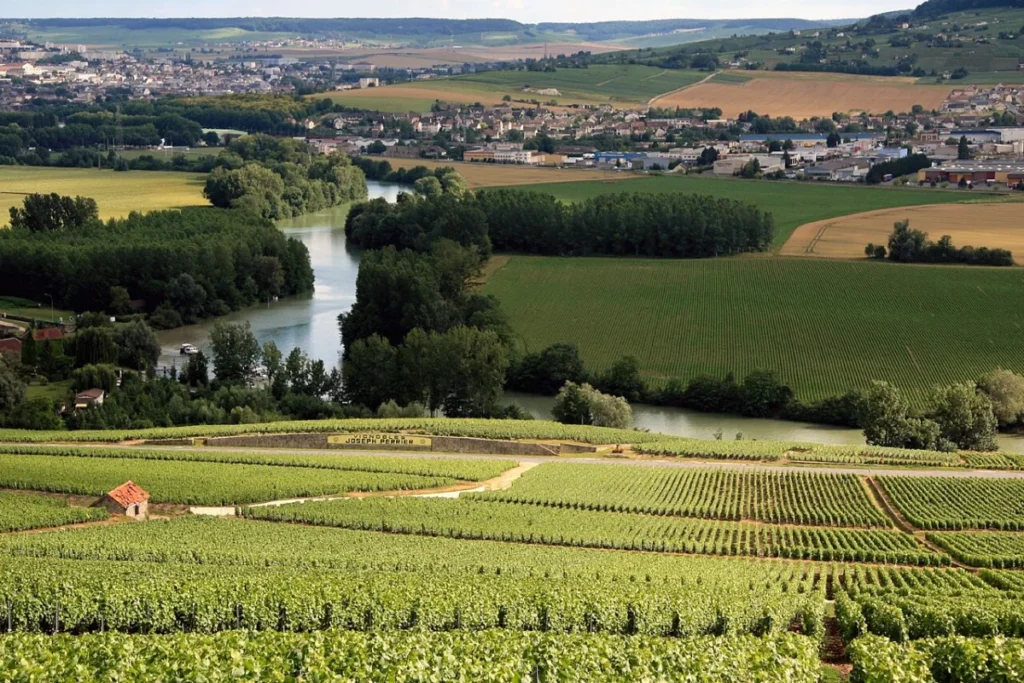
The only place in the world where true Champagne is made, from Chardonnay, Pinot Noir and Pinot Meunier. Reims and Épernay are the two bases: tour the chalk cellars of the great houses, walk the Avenue de Champagne in Épernay and visit smaller family growers in the villages. It is the easiest wine region to visit from Paris. The official Champagne website explains the appellation and the main villages.
4. Loire Valley
The Loire Valley produces fresh, food-friendly wines along France's longest river: Sauvignon Blanc in Sancerre and Pouilly-Fumé, Chenin Blanc in Vouvray, Cabernet Franc reds in Chinon and Muscadet near Nantes. Combine tastings with the famous châteaux, and explore by bike on the Loire à Vélo cycle route. Tours and Saumur are good bases.
5. Rhône Valley
In the northern Rhône, steep terraces above the river produce powerful Syrah reds such as Côte-Rôtie and Hermitage. In the sunny south, Grenache-based blends dominate, led by Châteauneuf-du-Pape and Gigondas. Avignon makes a perfect base for the southern Rhône; see our guide to things to do in Avignon.
6. Alsace
On the German border, Alsace makes aromatic white wines named after their grapes, unlike most of France: Riesling, Gewurztraminer and Pinot Gris. The Alsace Wine Route winds for about 170 km through half-timbered villages such as Riquewihr and Eguisheim, with tasting rooms on every street. Colmar is the ideal base. The Alsace wine council has maps of the route.
7. Provence
Provence is the capital of pale, dry rosé, which makes up most of its production, while Bandol on the coast is known for serious reds from Mourvèdre. Visit wineries among the lavender and olive groves, and base yourself in Aix or the Luberon; our Provence travel guide and Aix-en-Provence guide cover the region.
8. Languedoc-Roussillon
The largest of the French wine regions by vineyard area stretches along the Mediterranean from the Rhône to the Spanish border. Once known for bulk wine, it is now full of ambitious winemakers, and it offers some of the best-value bottles in France, from Pic Saint-Loup and Minervois to Corbières. Montpellier and Carcassonne make good bases.
9. South West
A varied region inland from Bordeaux, with dark Malbec in Cahors, tannic Madiran, sweet Jurançon and the reds and whites of Bergerac. It is also the home of Armagnac brandy, and its farmhouse food, from duck to foie gras, is reason enough to visit.
10. Jura and Savoie
Two of the smallest French wine regions, in the mountains of the east. The Jura is famous for its nutty vin jaune, aged under a layer of yeast, while Savoie makes crisp Alpine whites that go perfectly with fondue. Combine them with a summer hiking trip or a winter ski holiday.
11. Corsica
The most unusual of the French wine regions, the island of Corsica grows grapes found almost nowhere else in France, such as Nielluccio and Sciaccarellu for reds and Vermentino for whites. Patrimonio in the north is the best-known area, and tastings come with sea and mountain views.
Planning a wine trip in France? Fly into Paris, Bordeaux or Lyon and book hotels early for the harvest season. Compare flights and hotels for your dates.
Which French wine region should you visit?
- Short trip from Paris: Champagne, as a day trip or an overnight stay in Reims or Épernay.
- Famous châteaux and a great city: Bordeaux and Saint-Émilion.
- Wine lovers and food lovers: Burgundy, based in Beaune.
- A scenic road trip: the Alsace Wine Route or the Loire Valley with its châteaux.
- Sunshine and rosé: Provence, combined with the coast or the lavender fields.
- Value and fewer crowds: Languedoc-Roussillon or the South West.
Tips for visiting French wine regions
- Book tastings ahead. Many smaller estates only open by appointment, and big Champagne houses sell timed tours.
- Plan your transport. Drink-driving limits in France are strict, so join a tour, hire a driver or cycle between villages.
- Buy direct. Prices at the cellar door are often lower than in shops, and many estates can ship abroad.
- Learn a few words. Dégustation means tasting, cave means cellar and domaine means wine estate.
- Respect the harvest. In September and October winemakers are busy, so book early and be flexible.
Our tip: pick one region and stay two or three nights rather than trying to see several. The best moments are often the unplanned ones: a winemaker opening one more bottle, or lunch in a village bistro.
Best time to visit the French wine regions
May to October is the main season in the French wine regions, when estates are open and the vineyards are green. The harvest, usually from early September to mid-October, is the most exciting time, with festivals in many villages, but also the busiest. Spring is quiet and pretty, and winter is the low season, when many estates close but city wine bars and museums stay open. See our guide to the best time to visit France for weather by month.
French wine regions: FAQ
How many wine regions are there in France?
France is usually divided into about 11 to 13 major wine regions, including Bordeaux, Burgundy, Champagne, the Loire Valley, the Rhône Valley, Alsace, Provence, Languedoc-Roussillon, the South West, the Jura, Savoie and Corsica.
Which French wine region is closest to Paris?
Champagne. Reims is about 45 minutes from Paris by TGV, so you can visit the cellars on a day trip.
What is the most famous French wine region?
Bordeaux and Burgundy are the most famous for red wine, and Champagne is the most famous for sparkling wine.
When is the best time to visit French wine regions?
From May to October, when estates are open. The harvest in September and early October is the most atmospheric time, but book ahead.
Which French wine region is best for beginners?
Champagne and Bordeaux are the easiest to visit, with many tours and English-speaking guides. Alsace is also beginner-friendly, because its wines are labelled by grape.
Ready to plan your wine trip?
Choose one of the French wine regions, book tastings ahead and stay a few nights among the vineyards.
More for your trip: our guide to visiting France, our Provence travel guide and our South of France itinerary.
Map and photos from Wikimedia Commons: map of the French wine regions by Archimatth (CC BY-SA 4.0); Champagne vineyards by Rob & Lisa Meehan (CC BY 2.0); Saint-Émilion by JLPC (CC BY-SA 3.0).
