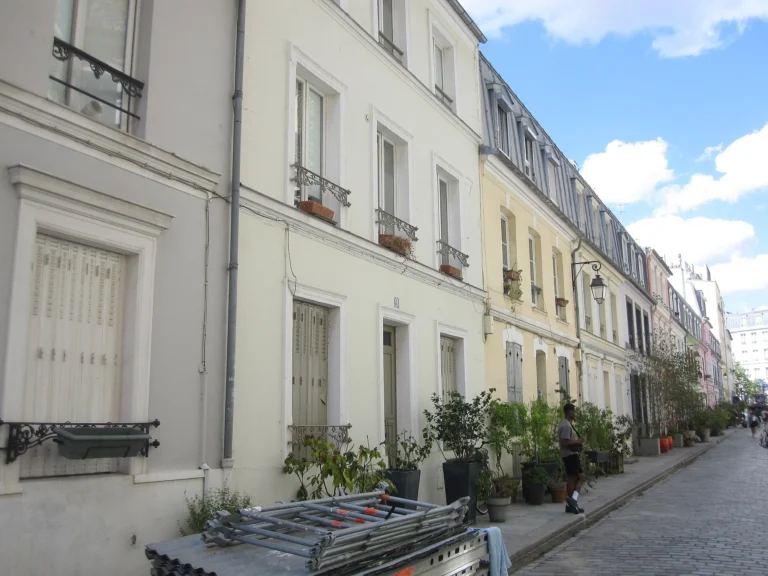
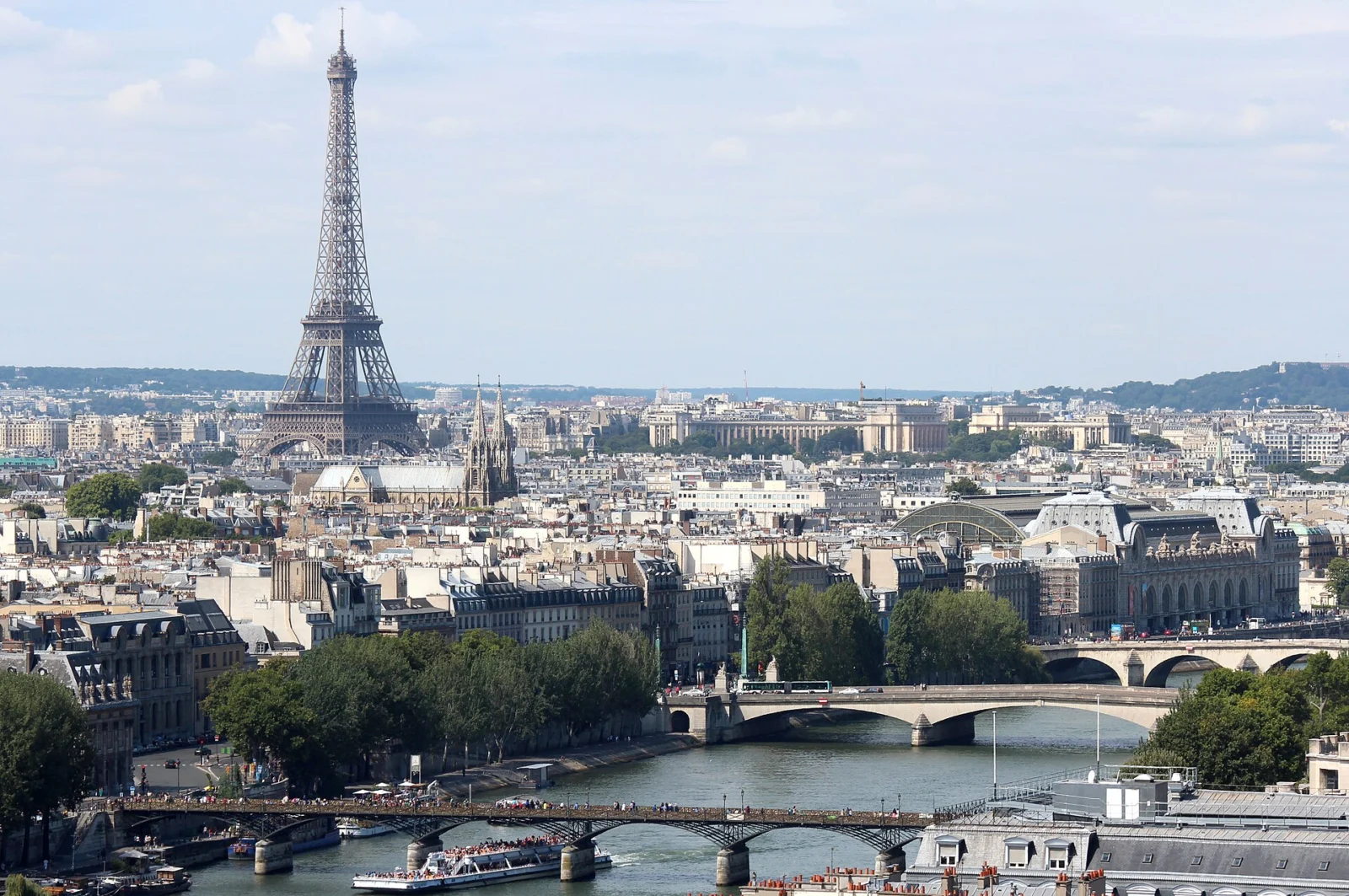
5 Days in Paris: The Perfect 5-Day Itinerary (with Versailles)
Five days in Paris is when the city stops being a checklist. You can see every big sight, spend a full day at Versailles and still keep time for long lunches and slow afternoons in the parks. This 5 day Paris itinerary groups the sights by neighbourhood, plans each museum around its closing day and tells you the best day of the week to start. Short on time? Our 3 days in Paris itinerary condenses the essentials, and the Paris travel guide covers neighbourhoods, transport and budget.
Your 5 days in Paris at a glance
Day 1: Île de la Cité, Notre-Dame, the Latin Quarter and the Luxembourg Gardens
Day 2: the Louvre, Palais-Royal, the Orangerie and a Seine cruise
Day 3: the Eiffel Tower, Les Invalides, Rodin and a late evening at the Musée d'Orsay
Day 4: day trip to the Palace of Versailles
Day 5: Montmartre, Le Marais and the Arc de Triomphe at sunset
Best day to start: Tuesday, so every museum falls on an open day
Best base: Le Marais, Saint-Germain or the Latin Quarter
Tickets to book before your 5 days in Paris
Timed tickets are now the norm for the headline sights. Book these 2 to 4 weeks ahead from April to October, and about a week ahead in winter:
- Sainte-Chapelle (Day 1, first slot of the morning)
- The Louvre (Day 2, opening time) on louvre.fr (or compare Louvre tickets and guided tours)
- Eiffel Tower (Day 3, morning) on the official Eiffel Tower site (or compare Eiffel Tower tickets). Summit tickets sell out first.
- Musée d'Orsay (Day 3, Thursday evening)
- Palace of Versailles (Day 4, 9:00 am entry) on the official Versailles site
- Arc de Triomphe rooftop (Day 5, sunset), worth booking in high season
Is the Paris Museum Pass worth it for 5 days? For this plan, usually yes. Start the 4-day pass on Day 2 and it covers the Louvre, the Orangerie, Les Invalides, Rodin, Orsay, Versailles and the Arc de Triomphe: seven entries in four days, well past the point where it saves money. Buy Sainte-Chapelle separately on Day 1, and remember that pass holders still need to reserve a time slot for the Louvre and Versailles. The Eiffel Tower is never included.
Day 1 in Paris: Île de la Cité, the Latin Quarter and the Luxembourg Gardens
9:00 am: Sainte-Chapelle and Notre-Dame
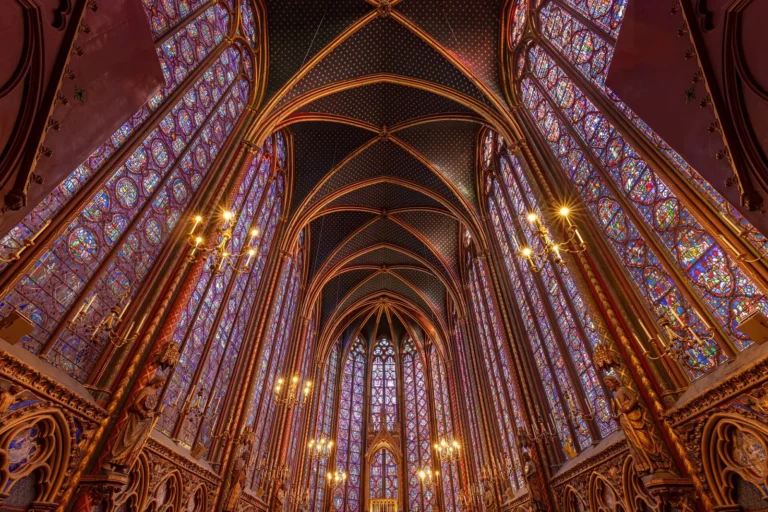
Start on the island where Paris began. Take the first entry slot at Sainte-Chapelle, when sunlight pours through its 13th-century stained glass, then walk five minutes to Notre-Dame. The cathedral reopened in December 2024 after the 2019 fire. Entry is free, and a free online time slot skips most of the line. If you have 45 minutes to spare, the Conciergerie next door, where Marie-Antoinette was imprisoned, is worth a look.
12:00 pm: Shakespeare and Company and rue Mouffetard
Cross the Petit-Pont to Shakespeare and Company, the famous English-language bookshop facing Notre-Dame, then climb through the Latin Quarter to rue Mouffetard for lunch. It is one of the oldest market streets in Paris, lined with cheese shops, bakeries and good-value bistros.
2:30 pm: the Panthéon and the Luxembourg Gardens
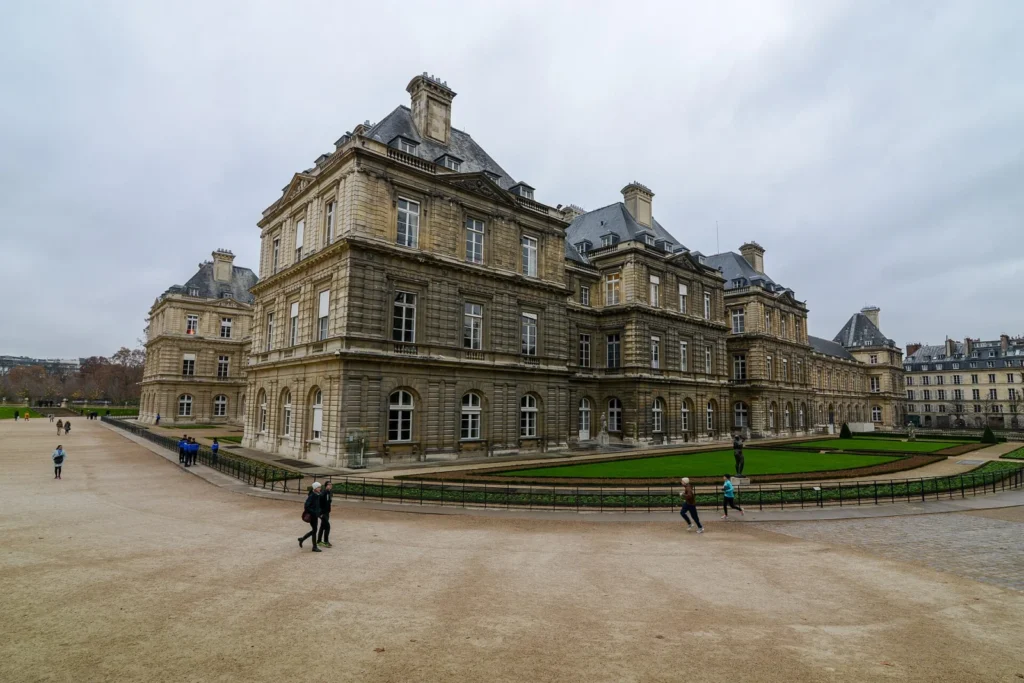
Walk to the Panthéon, where Voltaire, Victor Hugo and Marie Curie are buried, then spend the rest of the afternoon in the Luxembourg Gardens. Grab one of the green metal chairs by the Medici Fountain or the central pond. After a long flight, an easy afternoon outdoors is the best cure for jet lag.
7:00 pm: dinner in Saint-Germain-des-Prés
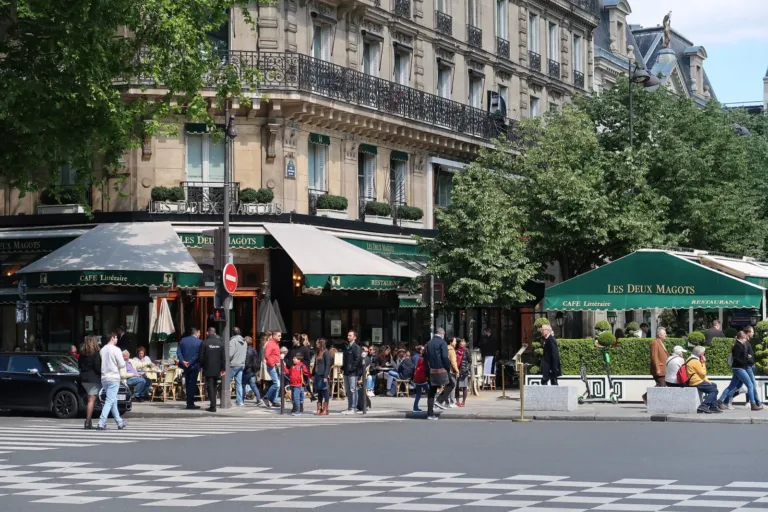
End the day in Saint-Germain. Have a drink on a café terrace on boulevard Saint-Germain, then look for dinner on the side streets around rue de Buci and rue Saint-André-des-Arts, which are better value than the famous literary cafés.
Day 1 tip: the whole day is on foot, about 5 km in total. The nearest metro to start is Cité (line 4). Landing in the morning? Drop your bags at the hotel and start with lunch in the Latin Quarter.
Day 2 in Paris: the Louvre, Palais-Royal and a Seine cruise

9:00 am: the Louvre
Be at the pyramid for opening with a timed ticket. Don't try to see everything. Pick one wing: for a first visit, the Denon wing has the Mona Lisa, the Winged Victory of Samothrace and great French paintings such as Liberty Leading the People. Three hours is about right before museum fatigue sets in.
12:30 pm: lunch around Palais-Royal
Exit towards rue de Rivoli and walk to the Palais-Royal garden, with its striped Buren columns and quiet arcades. Just north, the streets around rue Sainte-Anne are the city's Japanese quarter and the best place for a quick, affordable bowl of ramen or udon.
2:30 pm: the Tuileries and the Musée de l'Orangerie
Walk back through the Tuileries Garden to the Musée de l'Orangerie, home to Monet's giant Water Lilies. The two oval rooms take under an hour and are the calmest museum experience in Paris. Then continue to Place de la Concorde for the long view up the Champs-Élysées.
7:30 pm: a Seine cruise at sunset
After an early dinner, take a one-hour Seine cruise from near the Eiffel Tower or Pont Neuf. Time it for sunset, then watch the Eiffel Tower sparkle, which it does for five minutes on the hour, every hour after dark.
Day 2 tip: the Louvre and the Orangerie are both closed on Tuesdays. The Louvre also opens late on Wednesday and Friday evenings, a good fallback if morning slots are sold out.
Haven't booked yet? For five nights, one central hotel beats moving around. Compare flights and hotels for your dates.
Day 3 in Paris: the Eiffel Tower, Rodin and a late night at the Musée d'Orsay
9:00 am: Trocadéro and the Eiffel Tower
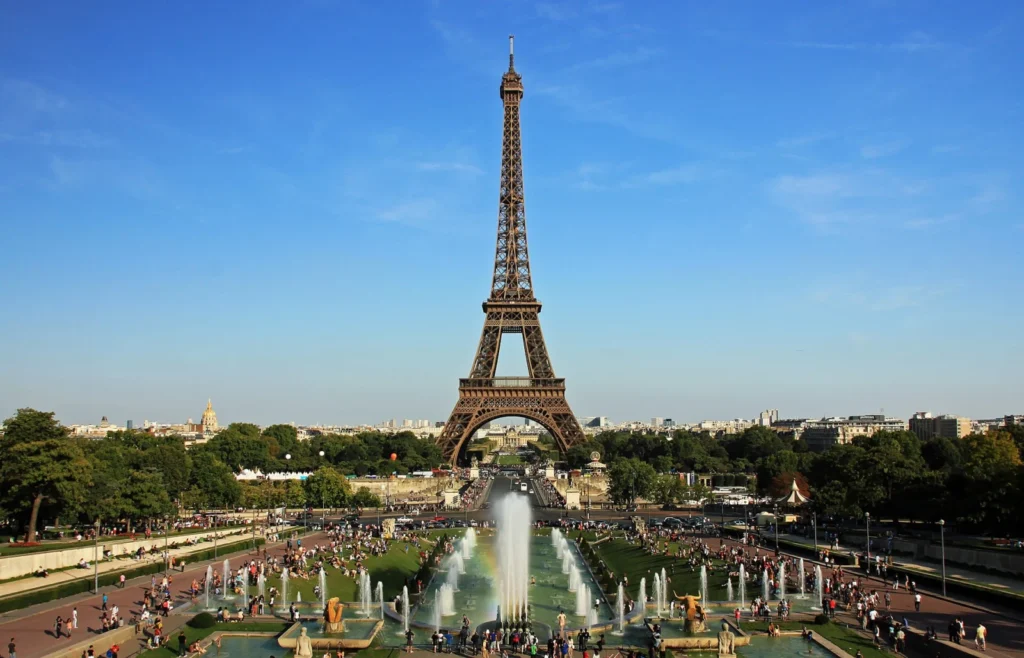
Start at Trocadéro for the classic view across the river, then cross the Pont d'Iéna for your timed entry. Morning slots have the shortest security lines. Allow about two hours if you go to the summit. Many visitors find the second floor has the better view, because you can still pick out the monuments.
12:30 pm: lunch on rue Cler
Walk 15 minutes to rue Cler, a market street in the 7th arrondissement. Build a picnic from its cheese shops, bakeries and delis to eat on the Champ de Mars, or sit down at one of its café terraces.
2:30 pm: Les Invalides and the Musée Rodin
See Napoleon's tomb under the golden dome of Les Invalides, then walk next door to the Musée Rodin. Its rose garden, with The Thinker and The Gates of Hell among the trees, is one of the loveliest places in Paris to sit for an hour.
6:00 pm: the Musée d'Orsay late opening
On Thursdays the Musée d'Orsay stays open until 9:45 pm, and the evening crowds are far thinner than in the morning. Head straight to the top floor for the Impressionists (Monet, Renoir, Degas, Cézanne), then look out over the Seine through the giant station clock.
Day 3 tip: if your Day 3 isn't a Thursday, flip the day: Orsay at 9:30 am and the Eiffel Tower in the late afternoon for sunset. Orsay and Rodin are both closed on Mondays.
Day 4: a day trip to the Palace of Versailles
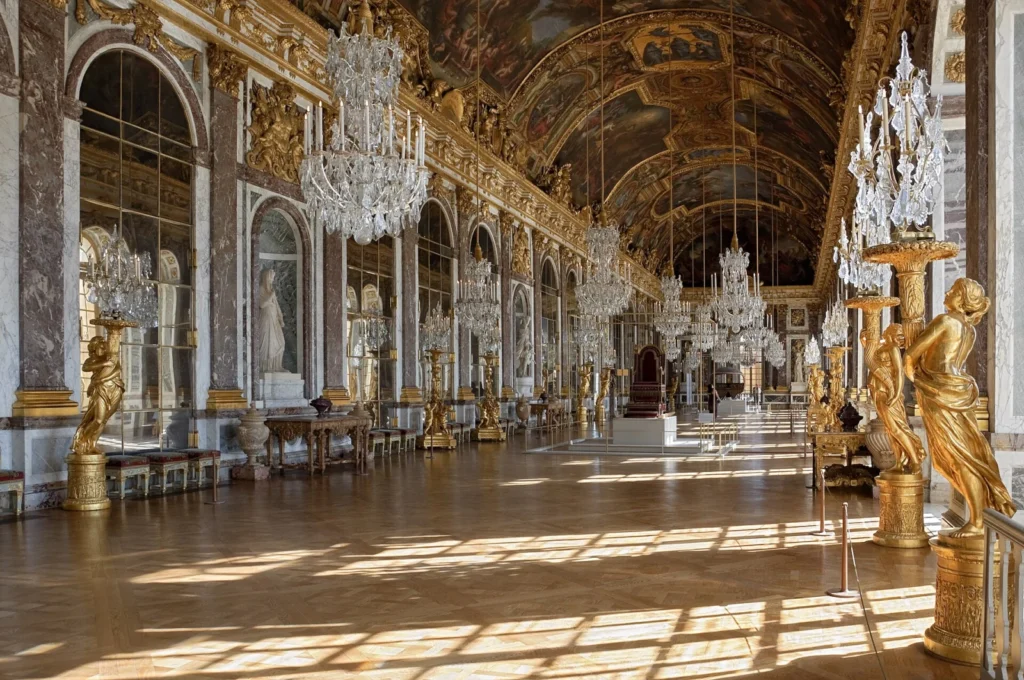
8:00 am: RER C to Versailles
Take the RER C to Versailles Château Rive Gauche, about 40 minutes from central Paris, and aim to reach the gates before the 9:00 am opening. Since 2025, a standard metro-train-RER ticket covers the whole Paris region, Versailles included, so there is no special fare to buy. Book your entry time before you go: compare Palace of Versailles tickets.
9:00 am: the palace and the Hall of Mirrors
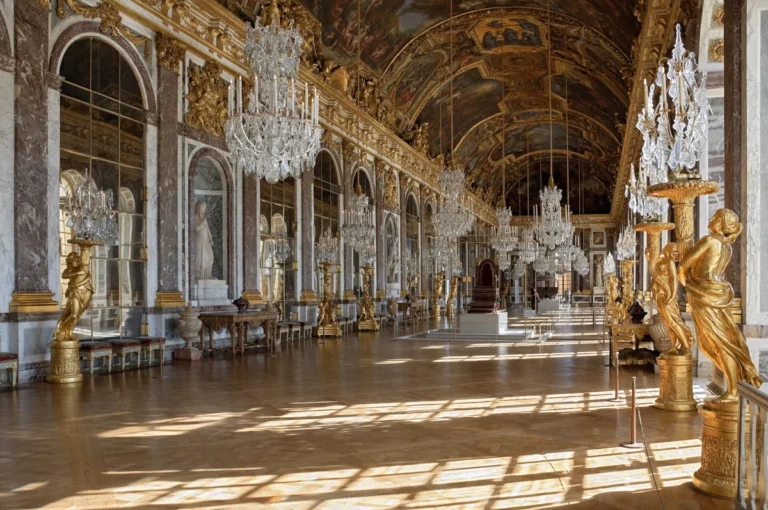
Go straight to the State Apartments and the Hall of Mirrors before the tour groups arrive. The palace takes about two hours. Even with a timed ticket, expect a security line from April to October.
12:30 pm: lunch in the park
Eat at one of the cafés in the gardens, or bring a picnic to the lawns along the Grand Canal. From spring to autumn, the formal gardens host the Musical Fountains shows on selected days, which need a separate garden ticket.
2:00 pm: the Trianon estate and Marie-Antoinette's Hamlet
Walk, rent a bike or take the little train to the Trianon palaces and Marie-Antoinette's Hamlet, a mock farming village at the far end of the park. It's the quietest part of Versailles and the one most day-trippers skip. Head back to Paris around 6 pm.
Day 4 tip: Versailles is closed on Mondays and busiest on Tuesdays, Saturdays and Sundays. If you start this itinerary on a Tuesday, Day 4 lands on a Friday, one of its calmer days.
Day 5 in Paris: Montmartre, Le Marais and the Arc de Triomphe
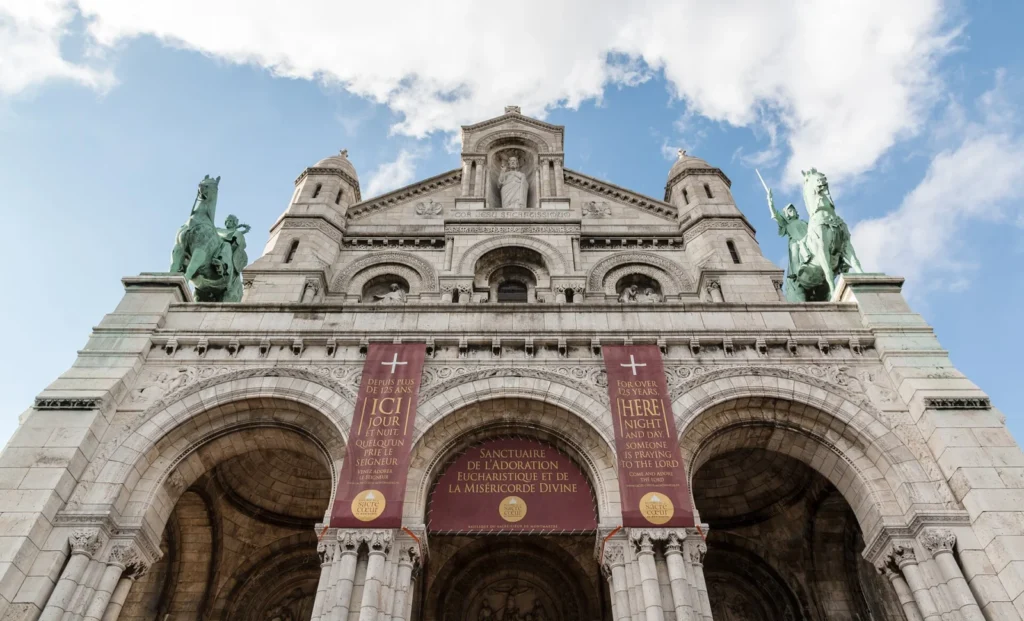
9:00 am: Montmartre and Sacré-Cœur
Start at Abbesses metro (line 12) and climb to Sacré-Cœur, which is free and has a sweeping view over Paris. Then find the quieter Montmartre behind the basilica: the Clos Montmartre vineyard, the pink Maison Rose café and the Moulin de la Galette. Place du Tertre is crowded, so walk through it rather than stopping.
12:30 pm: lunch in Le Marais
Take the metro down to Le Marais for a falafel on rue des Rosiers, or pick a stall at the Marché des Enfants Rouges, the oldest covered market in Paris.
2:30 pm: Place des Vosges and the Musée Carnavalet
Rest under the arcades of Place des Vosges, then visit the Musée Carnavalet, the museum of the history of Paris, whose permanent collections are free. Keep the rest of the afternoon for the Marais itself: hidden courtyards, independent boutiques and the best people-watching in the city.
6:30 pm: the Arc de Triomphe at sunset
End your five days where Paris is most dramatic. Climb to the roof of the Arc de Triomphe at sunset, when the twelve avenues of Étoile light up around you, and stay until the Eiffel Tower starts to sparkle. Finish with a farewell dinner back in your neighbourhood.
Day 5 tip: flying home on Day 5? Keep Montmartre for the morning, skip the Arc, and allow 60 to 90 minutes to reach Charles de Gaulle airport by RER B or taxi.
How to adjust this 5 day Paris itinerary
- Rainy day: swap in the covered passages (Galerie Vivienne and Passage des Panoramas), the Musée de Cluny or the Conciergerie.
- Not a palace person: replace Day 4 with Monet's house and garden at Giverny (open from April to October) or a slow day along Canal Saint-Martin.
- Travelling with kids: cut the Orangerie and Rodin, and add the Jardin d'Acclimatation or the Cité des Sciences.
- Want to see more of France? Five days also works as 3 days in Paris plus 2 in Normandy or the Loire Valley. Our France travel guide has ideas for routes beyond Paris.
Where to stay for 5 days in Paris

With five nights, choose one central base and stay put (our guide to where to stay in Paris compares eight areas). The best neighbourhoods for this itinerary:
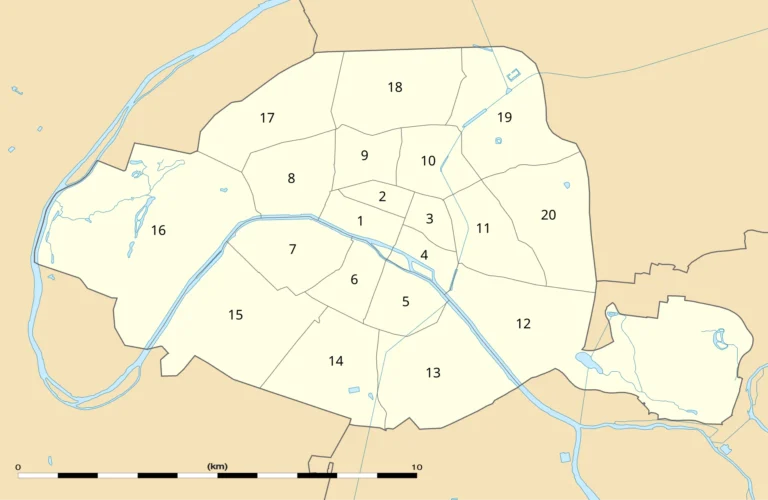
- Le Marais (3rd and 4th): walkable to Days 1, 2 and 5, full of restaurants and lively at night.
- Saint-Germain-des-Prés (6th): classic Left Bank Paris, close to Days 1 and 3, quieter and pricier.
- Latin Quarter (5th): the best value of the three, with direct RER C trains to Versailles from Saint-Michel.
- On a budget: look around Canal Saint-Martin, Bastille or Oberkampf (10th and 11th), 15 minutes by metro from the centre.
Compare prices on our hotel search and book early for April to October, when the best-located hotels fill up first.
Practical tips for 5 days in Paris
- Transport: if you start on a Tuesday, all five days fall within one Monday-to-Sunday week, so the weekly Navigo Découverte pass (you need a passport photo for the card) is usually cheaper than single tickets and also covers Versailles and the airports.
- Free sights: Notre-Dame, Sacré-Cœur, the Musée Carnavalet and all the parks are free.
- Pickpockets: they target metro line 1, the Eiffel Tower, Sacré-Cœur and the Louvre. Keep your phone out of back pockets and ignore petition sellers.
- When to go: April to June and September to October bring mild weather and thinner crowds. See our guide to the best time to visit France.
- Insurance: healthcare in France is excellent but not free for visitors. Check what cover you need in our travel insurance for France guide.
5 days in Paris: FAQ
Is 5 days in Paris enough?
Yes. Five days covers all the major sights, a full day at Versailles and time for slow afternoons. Most first-time visitors don't feel rushed with this plan. You'd need a week or more to add extra day trips such as Giverny or Champagne.
Is 5 days in Paris too long?
Not for a first visit. Paris easily fills five days. If you prefer variety, replace Day 4 with another day trip, or split your time into 3 days in Paris and 2 in Normandy, the Loire Valley or Champagne.
What is the best day to start a 5 day Paris itinerary?
Tuesday. It puts the Louvre on a Wednesday, the Musée d'Orsay's late opening on Thursday, Versailles on a calmer Friday and Montmartre and the Marais on Saturday. Avoid museum visits on Mondays (Orsay, Rodin, Versailles and Carnavalet are closed) and Tuesdays (the Louvre and Orangerie are closed).
Should I buy the Paris Museum Pass for 5 days?
For this itinerary, yes. The 4-day pass started on Day 2 covers the Louvre, the Orangerie, Les Invalides, Rodin, Orsay, Versailles and the Arc de Triomphe. You still need to book time slots for the Louvre and Versailles.
What is the cheapest month to go to Paris?
January and February, after the New Year holidays, usually have the lowest hotel prices and the shortest queues, followed by November. Avoid big trade-fair weeks and school holidays. See our guides to the best time to visit Paris and budget hotels in Paris.
Is $5,000 enough for 5 days in Paris?
For two people, $5,000 is usually enough for five comfortable days excluding flights: a good mid-range hotel, café and bistro meals, the main museums and a day at Versailles. Budget travellers can do it for much less, while luxury hotels and fine dining can easily cost more.
What should I watch out for in Paris?
Pickpockets are the main problem, especially on crowded metro lines, at the Eiffel Tower and in Montmartre. Ignore anyone with a petition, a "found" gold ring or a free bracelet, use only official taxis, and book timed tickets for sights like Sainte-Chapelle and the Catacombs on their official websites.
Is 5 days in Paris enough with kids?
Yes. Five days lets you slow the pace with a park or a playground every day, keep museum visits short and add a family favourite such as the Jardin d'Acclimatation or a boat trip on the Seine.
Ready for your 5 days in Paris?
Book flights and a central hotel early, especially from April to October, then reserve your Louvre, Eiffel Tower and Versailles time slots.
Only have a long weekend? Follow our 3 days in Paris itinerary, or read the France travel guide for trips beyond Paris.
Photos from Wikimedia Commons: Seine and Eiffel Tower by Zinneke (CC BY-SA 3.0); Luxembourg Gardens by Jorge Láscar (CC BY 2.0); Louvre by Benh Lieu Song (CC BY-SA 4.0); Eiffel Tower from Trocadéro by NonOmnisMoriar (CC BY-SA 3.0); Hall of Mirrors by Myrabella (CC BY-SA 3.0); Sacré-Cœur by Dietmar Rabich (CC BY-SA 4.0); Place des Vosges by GFreihalter (CC BY-SA 4.0).